3.1 · Qué significa realmente "desde cero" 3.1 · What "From Zero" Really Means
"Desde cero" no significa construir en el vacío. No significa ignorar siglos de práctica educativa, ni despreciar las instituciones existentes, ni pretender que la experiencia acumulada carece de valor. Significa algo más preciso y más útil: darse permiso para diseñar sin que las inercias institucionales determinen los límites de lo posible. "From zero" does not mean building in a vacuum. It does not mean ignoring centuries of educational practice, or dismissing existing institutions, or pretending that accumulated experience has no value. It means something more precise and more useful: giving oneself permission to design without institutional inertia determining the limits of the possible.
La diferencia es crucial. Cuando una universidad existente intenta transformarse, cada decisión de diseño está condicionada por lo que ya existe: los departamentos, los programas de estudio, los roles profesionales y capacidades ya establecidos, los sistemas informáticos, los edificios, las expectativas de los estudiantes actuales, la cultura organizativa. No es que estos condicionantes sean siempre negativos (muchos encarnan sabiduría acumulada), pero funcionan como un campo gravitatorio que atrae toda innovación hacia lo incremental. El resultado habitual es lo que podríamos llamar "innovación cautiva": cambios que parecen significativos sobre el papel pero que, en la práctica, quedan absorbidos por la lógica del sistema existente. The difference is crucial. When an existing university tries to transform itself, every design decision is conditioned by what already exists: departments, study programs, established professional roles and capabilities, IT systems, buildings, current students' expectations, organizational culture. It's not that these constraints are always negative (many embody accumulated wisdom), but they function as a gravitational field that pulls all innovation toward the incremental. The usual result is what we might call "captive innovation": changes that look significant on paper but, in practice, get absorbed by the logic of the existing system.
"Desde cero" es la operación mental que suspende ese campo gravitatorio. Es preguntarse: si tuviéramos que resolver el problema del aprendizaje hoy, con lo que sabemos sobre cómo aprenden las personas y con las capacidades tecnológicas disponibles, ¿qué diseñaríamos? La respuesta no tiene por qué ser radicalmente diferente de lo existente en todos los aspectos. Pero el ejercicio de pensarlo sin condicionantes revela qué partes de las instituciones actuales son realmente funcionales y cuáles son meros artefactos históricos que persisten por inercia. "From zero" is the mental operation that suspends that gravitational field. It means asking: if we had to solve the problem of learning today, with what we know about how people learn and with the technological capabilities available, what would we design? The answer doesn't have to be radically different from what exists in every aspect. But the exercise of thinking without constraints reveals which parts of current institutions are truly functional and which are mere historical artifacts persisting through inertia.
Y aquí está la paradoja productiva: la infraestructura mínima que resulta de este ejercicio está diseñada para "instalarse" tanto en organizaciones nuevas como en organizaciones preexistentes. No es necesario destruir lo existente para beneficiarse del pensamiento desde cero; basta con saber qué se construiría si se pudiera, para después identificar los caminos más efectivos de transformación dentro de lo que existe. And here lies the productive paradox: the minimum infrastructure that results from this exercise is designed to be "installed" in both new and pre-existing organizations. It is not necessary to destroy what exists to benefit from thinking from zero; it is enough to know what would be built if possible, to then identify the most effective transformation paths within what already exists.
3.2 · Cuatro ventajas del diseño desde cero 3.2 · Four Advantages of Clean-Sheet Design
¿Qué se gana pensando desde cero? Al menos cuatro aspectos sustanciales. What do we gain by thinking from zero? At least four substantial aspects.
3.3 · Lo que no se puede diseñar desde cero 3.3 · What Cannot Be Designed From Zero
Sería deshonesto (y estratégicamente ingenuo) no reconocer que "desde cero" tiene limitaciones reales. Hay dimensiones donde la metáfora del clean-sheet design encuentra sus fronteras: It would be dishonest (and strategically naive) not to recognize that "from zero" has real limitations. There are dimensions where the clean-sheet design metaphor meets its boundaries:
3.4 · Riesgos de la apuesta tecnológica 3.4 · Risks of the Technology Bet
Una "universidad" que se apalanca fuertemente en IA generativa hereda sus riesgos. No abordarlos en el diseño sería irresponsable: A "university" that heavily leverages generative AI inherits its risks. Not addressing them in the design would be irresponsible:
La paradoja de la velocidad en el aprendizaje The paradox of speed in learning
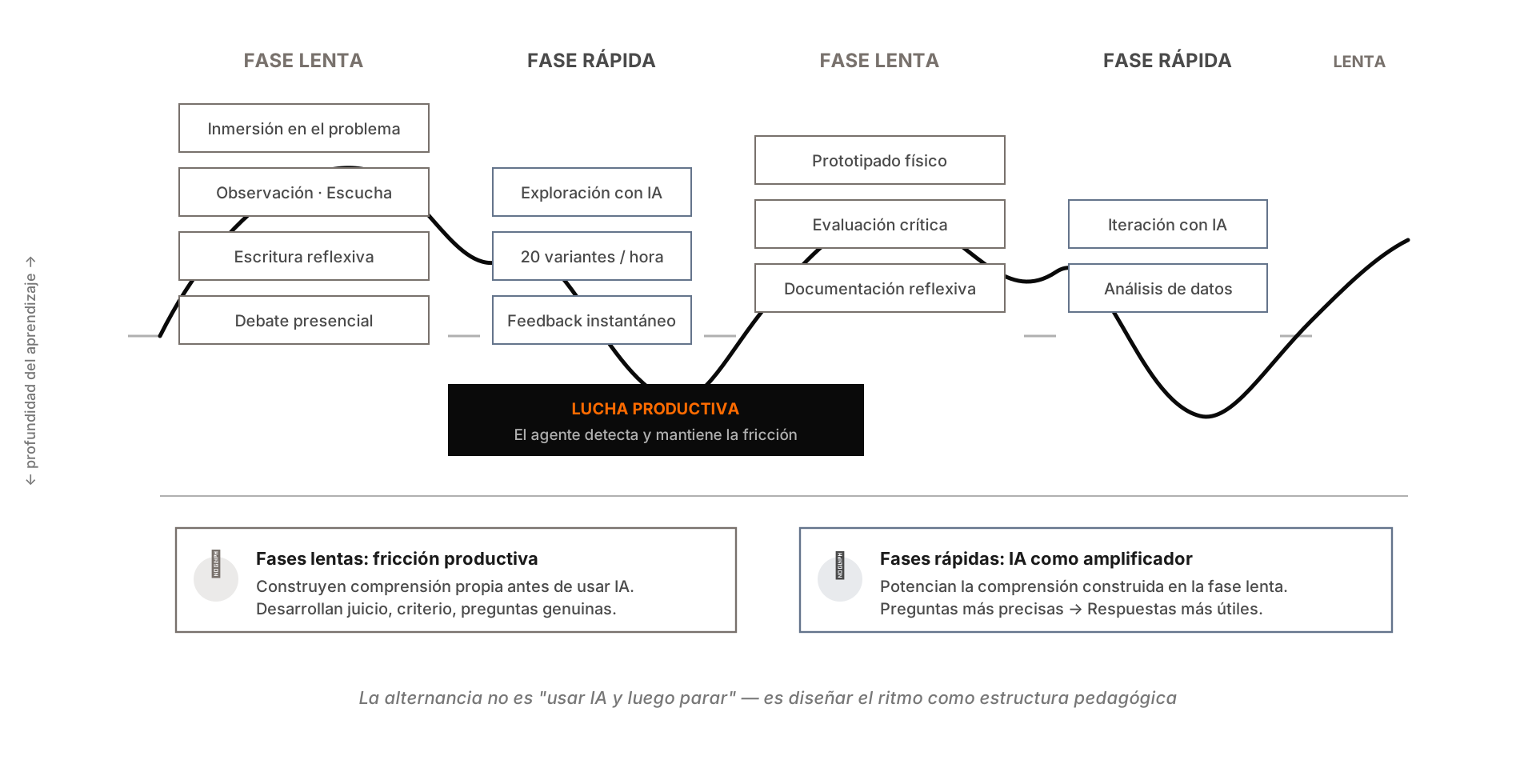
La inteligencia artificial acelera dramáticamente el procesamiento de información. Pero el aprendizaje profundo —aquel que transforma capacidades— no se acelera en la misma proporción. Aprender a pensar con rigor, a formular preguntas genuinas, a sostener la atención ante la complejidad: todo esto requiere una lentitud deliberada. Artificial intelligence dramatically accelerates information processing. But deep learning —that which transforms capabilities— does not accelerate proportionally. Learning to think rigorously, to formulate genuine questions, to sustain attention amid complexity: all this requires deliberate slowness.
Rápido Fast
- Exploración con IA AI exploration
- Generación de variantes Variant generation
- Feedback formativo instantáneo Instant formative feedback
- Simulación y modelado Simulation and modeling
- Síntesis automática Automatic synthesis
Lento Slow
- Escritura manuscrita en exploración Handwriting in exploration
- Lectura con anotación crítica Reading with critical annotation
- Debate presencial sin pantallas In-person debate without screens
- Prototipado físico con las manos Physical prototyping with hands
- Reflexión sobre qué documentar Reflection on what to document
La lentitud no es ausencia de velocidad. Es presencia deliberada de fricción cognitiva donde esa fricción es pedagógicamente productiva. Slowness is not the absence of speed. It is deliberate presence of cognitive friction where that friction is pedagogically productive.
4.1 · La paradoja del aprendizaje en la era de la IA 4.1 · The learning paradox in the age of AI
Vivimos un momento paradójico. La inteligencia artificial acelera dramáticamente la producción y el procesamiento de información: un agente puede sintetizar un paper en segundos, generar un primer borrador en minutos, resolver un problema de programación en un instante. Esta aceleración es real y valiosa. Pero el aprendizaje profundo (aquel que transforma capacidades, que reconfigura cómo una persona piensa y actúa) no se acelera en la misma proporción. Aprender a pensar con rigor, a formular preguntas genuinas, a sostener la atención ante la complejidad, a ejercer juicio crítico ante la incertidumbre: todo esto requiere tiempo, esfuerzo y, con frecuencia, una lentitud deliberada que se resiste a la lógica de la eficiencia. We live in a paradoxical moment. Artificial intelligence dramatically accelerates the production and processing of information: an agent can synthesize a paper in seconds, generate a first draft in minutes, solve a programming problem in an instant. This acceleration is real and valuable. But deep learning (that which transforms capacities, that reconfigures how a person thinks and acts) does not accelerate at the same rate. Learning to think rigorously, to formulate genuine questions, to sustain attention in the face of complexity, to exercise critical judgment amid uncertainty: all of this requires time, effort and, frequently, a deliberate slowness that resists the logic of efficiency.
El riesgo educativo principal de nuestra época no es la falta de acceso al conocimiento (ese problema está en vías de resolución) sino la atrofia de las capacidades cognitivas necesarias para usar bien el conocimiento accesible. Si un aprendedor delega sistemáticamente en la IA las tareas que le resultan difíciles (la escritura que requiere pensamiento estructurado, el análisis que exige atención sostenida, la argumentación que demanda considerar posiciones contrarias), las capacidades que no ejercita se debilitan. La IA, diseñada para optimizar la eficiencia, puede acabar optimizando la superficialidad. The primary educational risk of our time is not lack of access to knowledge (that problem is being resolved) but the atrophy of cognitive capacities needed to use accessible knowledge well. If a learner systematically delegates to AI the tasks that are difficult for them (writing that requires structured thinking, analysis that demands sustained attention, argumentation that requires considering opposing positions), the capacities they don't exercise weaken. AI, designed to optimize efficiency, can end up optimizing superficiality.
4.2 · Qué son las tecnologías lentas 4.2 · What are slow technologies
La respuesta no es renunciar a la velocidad sino aprender a alternar ritmos. Es lo que hemos denominado "tecnologías lentas para pensar con IA": prácticas, formatos y experiencias de aprendizaje que introducen deliberadamente fricción cognitiva, lentitud y profundidad en journeys que también incluyen fases rápidas potenciadas por IA. The answer is not to abandon speed but to learn to alternate rhythms. This is what we have called "slow technologies for thinking with AI": practices, formats and learning experiences that deliberately introduce cognitive friction, slowness and depth into journeys that also include rapid phases powered by AI.
Existe una tensión aparente dado que proponemos una infraestructura IA potentísima, pero también "tecnologías lentas". ¿No es contradictorio? No. Es la fricción la que lo explica. There is an apparent tension: we propose a very powerful AI infrastructure, but also "slow technologies." Isn't this contradictory? No. Friction explains it.
Las "dificultades deseables" de Bjork son una teoría sólida: el espaciado, la intercalación, la práctica de recuperación y la variabilidad mejoran el aprendizaje porque crean fricción cognitiva. Pero la mayoría de los tutores IA están diseñados para eliminar toda fricción. Bjork's "desirable difficulties" are solid theory: spacing, interleaving, retrieval practice and variability improve learning because they create cognitive friction. But most AI tutors are designed to eliminate all friction.
El "fracaso productivo" de Kapur propone algo más radical: que el fracaso estratégico antes de la instrucción produce aprendizaje más profundo. Los estudiantes exploran sin orientación, fracasan, documentan qué intentaron. Solo después reciben instrucción. Kapur's "productive failure" proposes something more radical: that strategic failure before instruction produces deeper learning. Students explore without guidance, fail, document what they tried. Only then do they receive instruction.
Para generaciones que crecen bajo aceleración constante, la lentitud es un acto político y cognitivo. Diseñar deliberadamente fases de fricción (escritura manuscrita, debate presencial, prototipado físico, silencio) alternadas con fases donde IA amplifica (generación rápida, feedback masivo, exploración amplia) es lo que produce pensamiento resistente. For generations growing up under constant acceleration, slowness is a political and cognitive act. Deliberately designing friction phases (handwriting, in-person debate, physical prototyping, silence) alternated with phases where AI amplifies (rapid generation, massive feedback, broad exploration) is what produces resistant thinking.
Algunos ejemplos concretos: Some concrete examples:
Antes de que una IA genere un borrador, la persona piensa en papel. No porque la IA no pueda hacerlo; porque el acto manual de escribir obliga a externalizar el pensamiento a un ritmo que fuerza la claridad. La neurociencia sugiere que la escritura manual activa circuitos cerebrales diferentes a la entrada de datos por teclado. Es más lento, pero el 'retardo' produce cognición de mayor calidad. Before AI generates a draft, the person thinks on paper. Not because AI can't do it; because the manual act of writing forces externalizing thought at a pace that enforces clarity. Neuroscience suggests that handwriting activates different brain circuits than keyboard data entry. It's slower, but the 'delay' produces higher quality cognition.
Frente a un texto, la IA puede producir un resumen instantáneamente. Pero la persona que lea anotando sus propias críticas, preguntas y conexiones con conocimiento anterior está aprendiendo a leer críticamente. La lentitud es el espacio donde ocurre el aprendizaje. La IA puede luego ayudar a sintetizar esas anotaciones en un mapa conceptual rico. Faced with a text, AI can produce a summary instantly. But the person who reads by annotating their own critiques, questions and connections with prior knowledge is learning to read critically. Slowness is the space where learning occurs. AI can then help synthesize those annotations into a rich concept map.
Los agentes de IA pueden facilitar un debate, formular preguntas de seguimiento, proponer síntesis. Pero hay algo que sucede en el encuentro presencial que la mediación textual no captura: la lectura del otro en tiempo real, la necesidad de formular la respuesta en el instante, la presencia del desacuerdo. Estos momentos de fricción relacional son donde ocurre la transformación cognitiva. La IA documenta lo que sucede en esos espacios; no debería dominarlos. AI agents can facilitate a debate, formulate follow-up questions, propose syntheses. But there is something that happens in the in-person encounter that textual mediation does not capture: reading the other in real time, the need to formulate the answer in the moment, the presence of disagreement. These moments of relational friction are where cognitive transformation occurs. AI documents what happens in those spaces; it should not dominate them.
En lugar de una calificación que reduce el aprendizaje a un número, una 'cartera de aprendizaje' que documenta cómo cambió el pensamiento de la persona a lo largo del tiempo. Esto es lento: requiere reflexión y documentación regularmente. Pero es precisamente esa lentitud la que produce metacognición. La IA puede ayudar a detectar patrones en esos cambios; pero es la persona quien debe narrar su propia transformación. Instead of a grade that reduces learning to a number, a 'learning portfolio' that documents how a person's thinking changed over time. This is slow: it requires regular reflection and documentation. But it is precisely that slowness that produces metacognition. AI can help detect patterns in those changes; but it is the person who must narrate their own transformation.
Inspirados en prácticas de contemplación y retiro, pero con propósito cognitivo explícito. Un día, una semana, una persona o un equipo se detiene de la aceleración ordinaria para reflexionar, integrar, reimaginar. Sin conexión a redes, sin inputs externos, solo con lo que ya saben y el espacio para pensar profundamente. La IA asiste en la preparación de estas experiencias (curadurías de lecturas, síntesis previas) pero está completamente ausente durante el retiro. Inspired by contemplation and retreat practices, but with explicit cognitive purpose. For a day, a week, a person or team steps out of ordinary acceleration to reflect, integrate, reimagine. Without network connection, without external inputs, only with what they already know and space to think deeply. AI assists in preparing these experiences (curations of readings, prior syntheses) but is completely absent during the retreat.
En laboratorios de innovación ciudadana existe la "receta" como formato: una documentación que captura no solo qué se hizo sino cómo se decidió, dónde hubo errores, qué bifurcaciones se consideraron. Es intencionalmente detallada (toma tiempo leerla, toma tiempo hacerla) porque su riqueza está en la complejidad documentada. La IA puede ayudar a convertir una receta lenta en una "receta rápida" (una versión ejecutiva) sin perder la riqueza de la lenta. Pero reflexionar sobre qué documentar es el acto de aprendizaje que debe ser humano. In citizen innovation laboratories, the "recipe" exists as a format: documentation that captures not only what was done but how it was decided, where errors occurred, what bifurcations were considered. It is intentionally detailed (it takes time to read it, it takes time to make it) because its richness lies in documented complexity. AI can help convert a slow recipe into a "quick recipe" (an executive version) without losing the richness of the slow one. But reflecting on what to document is an act of learning that must remain human.
La lógica común a estos ejemplos: la lentitud no es ausencia de velocidad, sino presencia deliberada de fricción cognitiva donde esa fricción es pedagógicamente productiva. No se trata de hacer todo más lentamente. Se trata de elegir qué momentos requieren desaceleración para que ocurra el aprendizaje profundo, y qué momentos pueden ser potenciados por velocidad aumentada. The logic common to these examples: slowness is not the absence of speed, but the deliberate presence of cognitive friction where that friction is pedagogically productive. It's not about doing everything more slowly. It's about choosing which moments require deceleration for deep learning to occur, and which moments can be amplified by increased speed.
4.3 · El rol de la IA en tecnologías lentas 4.3 · The role of AI in slow technologies
¿Cómo se integra la IA en estas prácticas lentas sin anularlas? How is AI integrated into these slow practices without nullifying them?
El rol de los agentes de IA en tecnologías lentas es detectar y mantener la fricción cuando es productiva. Significa: The role of AI agents in slow technologies is to detect and maintain friction when it is productive. This means:
Una cosa es exploración productiva que requiere tiempo. Otra es bloqueo genuino. Los agentes pueden detectar diferencias: patrones de búsqueda lateral, documentación de intentos fallidos, preguntas que sugieren reencuadre —todas son señales de exploración. En contraste, peticiones crecientes de ayuda directa, búsqueda de caminos cortos, ausencia de documentación son señales de bloqueo. Los agentes pueden intervenir diferenciadamente: si es exploración, mantener la fricción; si es bloqueo, sugerir estrategias de desbloqueo sin resolver el problema. Productive exploration that requires time is one thing. Genuine blocking is another. Agents can detect differences: patterns of lateral searching, documentation of failed attempts, questions suggesting reframing—all are signals of exploration. In contrast, increasing requests for direct help, search for shortcuts, absence of documentation are signals of blocking. Agents can intervene differently: if it's exploration, maintain friction; if it's blocking, suggest unblocking strategies without solving the problem.
Los agentes pueden formular preguntas que obligan a externalizar el pensamiento: '¿Qué supuesto fundamental está en juego aquí?' o '¿Has considerado la posición opuesta?' o '¿Cómo podrías verificar eso?' La pregunta demora el avance; esa demora es productiva. Agents can formulate questions that force the externalization of thought: "What fundamental assumption is at stake here?" or "Have you considered the opposite position?" or "How could you verify that?" The question delays progress; that delay is productive.
Antes de que una IA sintetice automáticamente, puede preguntar: ¿qué crees que es lo más importante de lo que sucedió aquí? ¿Qué cambió en tu forma de pensar? ¿Qué no entiendes todavía? La síntesis viene después, enriquecida por la reflexión de la persona. Before AI automatically synthesizes, it can ask: what do you think is most important about what happened here? What changed in how you think? What don't you understand yet? The synthesis comes next, enriched by the person's reflection.
Mientras que la IA puede mediar encuentros, puede también diseñarlos para que el encuentro humano sea más rico. Preguntas provocadoras compartidas antes del encuentro, síntesis inteligentes que provocan desacuerdos productivos, documentación durante el proceso que atrapa momentos de vulnerabilidad intelectual. While AI can mediate encounters, it can also design them so that the human encounter is richer. Thought-provoking questions shared before the meeting, intelligent syntheses that provoke productive disagreements, documentation during the process that captures moments of intellectual vulnerability.
En una 'universidad' que opera con IA, esta lógica se amplifica: la IA puede generar automáticamente una 'receta rápida' a partir de la documentación detallada del proceso (la 'receta lenta'), haciendo el conocimiento producido más accesible sin perder la riqueza del proceso. Pero la reflexión sobre qué documentar y cómo hacerlo es en sí misma un acto de aprendizaje que debe seguir siendo humano: es una tecnología lenta de metacognición que no se puede delegar. In a 'university' that operates with AI, this logic is amplified: AI can automatically generate a 'quick recipe' from the detailed process documentation (the 'slow recipe'), making the produced knowledge more accessible without losing the richness of the process. But reflection on what to document and how to do it is itself an act of learning that must remain human: it is a slow technology of metacognition that cannot be delegated.
4.4 · Implicaciones para el diseño 4.4 · Implications for design
La alternancia deliberada de velocidades (tecnologías lentas alternadas con aceleración potenciada por IA) tiene implicaciones para varias capas de la infraestructura mínima que desarrollaremos en las secciones siguientes: The deliberate alternation of speeds (slow technologies alternated with AI-powered acceleration) has implications for several layers of the minimum infrastructure we will develop in the following sections:
En lugar de un flujo lineal (contenido → actividad → evaluación), ciclos que incluyen fases de lentitud intencional: exploración, documentación reflexiva, síntesis, y entonces reaceleración. Los agentes de IA acompañan este ciclo pero no lo contradicen. Instead of a linear flow (content → activity → evaluation), cycles that include phases of intentional slowness: exploration, reflective documentation, synthesis, and then reacceleration. AI agents accompany this cycle but do not contradict it.
No es un evento final sino un proceso continuo integrado en la lentitud de la documentación. La evaluación ocurre cuando la persona reflexiona sobre qué documentar, y cuando pares y facilitadores dan feedback sobre la calidad de esa documentación. It is not a final event but a continuous process integrated into the slowness of documentation. Evaluation occurs when the person reflects on what to document, and when peers and facilitators give feedback on the quality of that documentation.
El educador que era 'quien explicaba' ahora es 'quien diseña dónde mantener fricción, dónde liberar velocidad, cómo los agentes apoyan ambas cosas'. Requiere un nivel distinto de pericia. The educator who was 'the explainer' is now 'the designer of where to maintain friction, where to release speed, how agents support both.' It requires a different level of expertise.
Universidades 'rápidas' optimizadas por eficiencia generan cierto tipo de estudiante: quien busca lo óptimo, lo práctico, el camino más corto. Universidad Cero, con su alternancia deliberada, cultiva un ethos distinto: la valoración de la profundidad, la paciencia ante la complejidad, la documentación como pensamiento. 'Fast' universities optimized for efficiency generate a certain type of student: one who seeks the optimal, the practical, the shortest path. Universidad Cero, with its deliberate alternation, cultivates a different ethos: the valuing of depth, patience with complexity, documentation as thinking.
5.1 · De la transmisión a la producción 5.1 · From Transmission to Production
La pedagogía tradicional opera sobre una lógica de transmisión: el docente, que posee conocimiento, lo transfiere a estudiantes que carecen de él. El estudiante consume; el profesor produce (produce el contenido, produce la clase, produce las evaluaciones). El aprendedor es el extremo receptor de un flujo unidireccional. Traditional pedagogy operates on a logic of transmission: the teacher, who possesses knowledge, transfers it to students who lack it. The student consumes; the teacher produces (produces the content, produces the class, produces the evaluations). The learner is the receiving end of a unidirectional flow.
Esta lógica está completamente agotada. En el contexto de IA que puede consumir y sintetizar cualquier conocimiento existente, la propuesta de valor de "vamos a transmitirte lo que ya existe" no tiene sentido. No porque el conocimiento existente carezca de valor, sino porque no hay escasez de acceso a él. La escasez ahora está en otro lugar: en la capacidad de generar conocimiento nuevo, de aplicarlo a problemas reales, de integrar perspectivas diversas para crear algo que no existía antes. This logic is completely exhausted. In the context of AI that can consume and synthesize any existing knowledge, the value proposition of "we will transmit to you what already exists" makes no sense. Not because existing knowledge lacks value, but because there is no scarcity of access to it. The scarcity is now elsewhere: in the capacity to generate new knowledge, to apply it to real problems, to integrate diverse perspectives to create something that did not exist before.
Universidad Cero invierte esta lógica: el aprendedor produce. No en el sentido de "trabajo académico" (papers, proyectos, exámenes) sino en el sentido más profundo: crea artefactos, resuelve problemas, participa en la generación de valor que tiene consecuencias fuera del aula. Universidad Cero inverts this logic: the learner produces. Not in the sense of "academic work" (papers, projects, exams) but in the deepest sense: creates artifacts, solves problems, participates in value generation that has consequences outside the classroom.
Algunos ejemplos: Some examples:
5.2 · La documentación como aprendizaje 5.2 · Documentation as Learning
Cuando se aprende produciendo, la documentación no es un reporte sino parte integral del aprendizaje. When learning by producing, documentation is not a report but an integral part of learning.
La documentación en Universidad Cero no es un archivo posterior sino una práctica que ocurre durante el trabajo. El formato de "receta" captura no solo qué se hizo sino cómo se decidió, dónde hubo errores, qué bifurcaciones se consideraron. Esto transforma la documentación de depósito pasivo a infraestructura epistémica: documentar es pensar. Documentation in Universidad Cero is not a posterior archive but a practice that occurs during work. The "recipe" format captures not only what was done but how decisions were made, where errors occurred, what forks were considered. This transforms documentation from passive deposit to epistemic infrastructure: documenting is thinking.
Hay dos tipos de documentación que funcionan: There are two types of documentation that work:
La documentación reflexiva en tiempo real Reflexive Real-Time Documentation
Mientras el aprendedor está en proceso, documenta: preguntas que surgen, decisiones y por qué se toman, errores y qué se aprendió. Esta documentación en tiempo real es metacognición externalizada. El acto de escribir obliga a claridad. El re-leer lo escrito obliga a reflexión sobre el reflexionar. Es lento, deliberado, y generador de aprendizaje profundo. While the learner is in process, they document: questions that arise, decisions and why they are made, errors and what was learned. This real-time documentation is externalized metacognition. The act of writing forces clarity. Re-reading what was written forces reflection on the reflecting. It is slow, deliberate, and generative of deep learning.
La síntesis posterior estructurada Structured Posterior Synthesis
Después de terminar una fase de trabajo, el aprendedor (con apoyo de facilitadores o agentes de IA que sugieren preguntas) produce una síntesis: qué se propusieron, qué hicieron, qué pasó, qué aprendieron, qué harían distinto. Esta síntesis no es un reporte académico sino una "receta" en el sentido que le dan los laboratorios ciudadanos: una documentación que transmite no solo qué, sino cómo, los dilemas, los aprendizajes. After finishing a work phase, the learner (with support from facilitators or AI agents that suggest questions) produces a synthesis: what they set out to do, what they did, what happened, what they learned, what they would do differently. This synthesis is not an academic report but a "recipe" in the sense given by citizen labs: documentation that transmits not only what, but how, the dilemmas, the learnings.
En una "universidad" que opera con IA, esta lógica se amplifica: la IA puede generar automáticamente una "receta rápida" a partir de la documentación detallada del proceso (la "receta lenta"), haciendo el conocimiento producido más accesible sin perder la riqueza del proceso. Pero la reflexión sobre qué documentar y cómo hacerlo es en sí misma un acto de aprendizaje que debe seguir siendo humano: es una tecnología lenta de metacognición que no se puede delegar. In a "university" that operates with AI, this logic is amplified: AI can automatically generate a "quick recipe" from the detailed process documentation (the "slow recipe"), making the produced knowledge more accessible without losing the richness of the process. But reflection on what to document and how to do it is itself an act of learning that must remain human: it is a slow technology of metacognition that cannot be delegated.
Tres niveles de documentación: el contexto (por qué se abordó este problema), la receta rápida (qué se hizo, replicable en minutos) y la receta lenta (cómo se llegó a las decisiones, los errores, las conversaciones que cambiaron la dirección). La receta lenta es donde reside el aprendizaje profundo. La IA puede asistir en la estructuración, pero la reflexión es irreductiblemente humana. Three levels of documentation: context (why this problem was addressed), quick recipe (what was done, replicable in minutes), and slow recipe (how decisions were reached, errors, conversations that changed direction). The slow recipe is where deep learning resides. AI can assist in structuring, but reflection is irreducibly human.
Los cuadernos de laboratorio son simultáneamente patrimonio colectivo humano y alimentación de agentes de IA que luego asisten documentación mejorada. Ciclo iterativo entre comunidad y máquina: humanos documentan, IA aprende patrones, IA asiste en documentación mejorada, humanos construyen sobre insights aumentados. Lab notebooks are simultaneously collective human heritage and feeding AI agents that then assist with improved documentation. Iterative cycle between community and machine: humans document, AI learns patterns, AI assists in improved documentation, humans build on augmented insights.